

Some leaders treat mishaps like disasters. The strongest leaders understand how mistakes fit in as part of the process.
This is one of the key mantras of a growth mindset, and promoting this at work can help teams formulate new ideas, adapt and learn, without fearing imperfection.
So if you’re looking for activities to help teams get into a growth mindset, let’s get it started.
What exactly is meant by “growth mindset”?
A growth mindset is built around one simple idea: people are capable of improving.
Skills can be developed, confidence can grow, and mistakes don’t need to become permanent labels attached to somebody forever.
That mindset becomes incredibly valuable at work because teams stop fearing challenges. People become more open to feedback, more willing to adapt, and far less likely to panic when something doesn’t go perfectly the first time around.
A few interesting datapoints support this idea:
- Stanford research found that growth mindsets can improve motivation, resilience, and long-term performance.
- Microsoft famously shifted towards growth mindset thinking to help encourage stronger innovation and collaboration across teams, with great results.
It’s little wonder, then, that more companies are trying to build workplaces where adaptability is encouraged, instead of being something you do when things go wrong.
20 team activities you can use to develop a growth mindset
So here are 20 of the best activities to promote growth mindsets in your work teams:
1. Sharing setbacks (turning failure into fuel)
Firstly, a growth mindset recognizes a simple principle: that we can all learn from our mistakes. An issue with this, though, is that it’s hard to grow when a person feels like they’re the only one who admits mistakes.
So turn this process into a shared activity. Each person can share a setback they’ve experienced, either professionally or personally, and then try to find the message it taught them. Keep it light and brief, and support growth mindsets by recognizing that we are all human.
2. Practice your “yet” statements
The seed of a growth mindset is often planted through very small language changes. One of the simplest is adding the word “yet” to the end of a negative thought.
Instead of saying “I don’t understand this,” you flip it into “I don’t understand this, yet.” “I’m not good at presentations, yet.” It sounds small, but it can generate a shift in focus, from limitation to progress. It’s a quick teambuilding activity that only takes a few minutes, but can genuinely shift how people approach challenges.
3. Brainstorming the “Worst Idea Possible” (reverse brainstorming)
If you aren’t afraid to get a bit silly, you might want to try flipping the objectives of brainstorming completely on their head.
We know how many brainstorming sessions make people feel pressured, so they try to say something smart, as quickly as possible. The ideas are often met with silence.
So give it a shot, ask teams to come up with the worst idea imaginable instead. The more ridiculous, unrealistic and over-the-top, the better. You’ll probably hear ideas that would bankrupt the company within a week, but that’s part of the fun (and the real learning comes straight after).
Once everyone relaxes a little, creativity really can flow more easily, and this is a powerful example of fun used in teambuilding activities for work.
4. Teach your teams something unexpected
Everyone is good at something outside their job title, even if it’s completely unrelated to work. Dave in accounts might have photography skills, while Sandra in HR bakes the best sourdough in the city.
So let team members teach each other something out of the blue, in short, sharp sessions. This activity naturally supports wider teambuilding goals and objectives because it encourages curiosity, confidence, and learning from something new.
5. A 5-minute “reflection reset”
Sometimes, growth mindsets need a moment of pause before they need another challenge.
Give your team members five quiet minutes to write down something they handled well recently, something they struggled with, and one thing they’d like to improve moving forward. No overthinking needed.
It’s a powerful, quick teambuilding activity that works surprisingly well because people rarely stop to reflect during a busy workday. Even a few minutes of honest reflection can shift someone’s perspective completely.
6. Break out of the group’s comfort zone
Rarely will you harness a growth mindset when teams feel completely comfortable. It’s too easy to not address challenges, to wait for a “more convenient time,” or to just ask someone else to do it.
So make an activity that focuses on drawing members out of their shells. It can be as simple as asking teams to take on a small challenge they’d normally avoid. That could be leading a discussion, pitching an idea first, or working with someone new.
The goal isn’t to make people feel too uncomfortable. Instead, the activity can gently push groups outside of the regular routine.
7. Learn something completely new together
There’s something strangely exciting about trying something new, or daunting, for the first time.
Pick a completely new skill and encourage the whole team to learn it as a team. There’s a lot of room for experimentation, such as cooking classes, improv, painting, or anything else that helps spark interest in something new.
These activities work best when “no one person is the expert.” Everyone has to learn, adjust and laugh through any awkward parts, building resilience and adaptability.
8. Escape the room, together!
Escape rooms are one of the best reminders that growth mindsets rarely happen alone. They hinge on effective communication and trying different approaches when the first idea doesn’t work.
Teams will quickly realize that stubbornly sticking to one solution is fruitless. Progress is much more likely when they’re open-minded, and receptive to their surroundings.
It also helps when the escape room setup is genuinely fun. You can use outside organizers or arrange the escape room yourself. Just remember, there has to be at least one way out!
9. Spend a day in someone else’s role
It’s easy to underestimate somebody’s job when you only see the finished result. Spending a day in another person’s role can change that very quickly.
This activity gives team members the chance to experience different responsibilities, workflows, and pressures firsthand. People often walk away with a completely different understanding of how the wider team operates, ready for growth-mindset.
It also encourages adaptability and curiosity, so activities like this can support stronger teambuilding goals and objectives when departments don’t interact closely enough.
10. Argue the opposite side (thoughtfully)
Most people naturally defend the opinion they already agree with. Like it or not, it’s a coping mechanism that often keeps us feeling safe.
Yet there are growth activities that encourage new ways of thinking. Use a (slightly) harmless debate topic. Examples could include:
- Remote work is better than office work
- Meetings should never last more than 15 minutes
- Pineapple belongs on pizza
The goal isn’t to “win” the debate, but to encourage open-minded thinking, and to practice convincing people of a new way of thinking. It’s a great way to get people to loosen up, too.
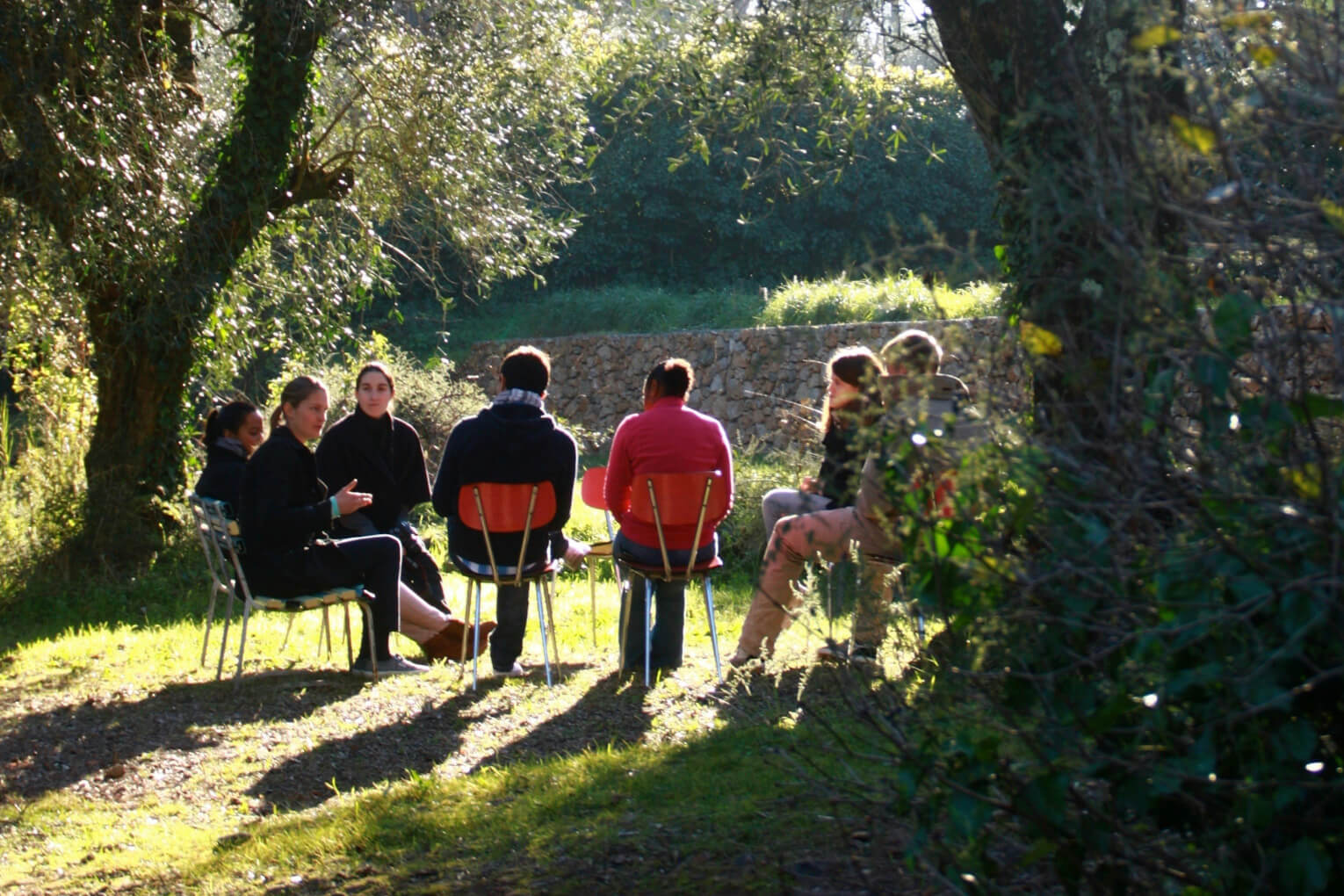
11. Take growth to the outdoors
Sometimes the best thing for a team is simply getting out of the building for a while.
Outdoor activities naturally push people to adapt. They’re literally in a new environment, after all. Depending on your location, look up hiking trails, scavenger hunts, obstacle courses, or even simple walking activities, to encourage new thinking.
It’s also much easier for people to relax outdoors, which helps conversations flow more naturally. That’s one reason why company retreats work so well for teams trying to build stronger growth mindsets together.
12. “What went wrong?” retrospectives
Another reflective and constructive activity, “what went wrong?” retrospectives can help us all unpack our mistakes.
A retrospective flips the focus. Instead of asking “Who caused the problem?”, the group looks at what happened, why it happened, and what could be improved next time. We can focus on learning, instead of blaming.
This one’s especially great after difficult projects or stressful periods. When your squad can stop treating small mistakes like disasters, they naturally develop resilience and adaptability for any challenges the future throws at them.
13. A 30-day growth challenge
For the next activity, try to think slightly more long-term. This works well because growth mindsets become stronger when people practice them consistently, instead of treating them like a one-day workshop.
Each person picks one small habit or skill they’d like to improve over the next 30 days. It could be public speaking, giving better feedback, staying organised, or even just speaking up more in meetings.
Help them keep track with a diary. You’re helping them develop the kind of mindset that generates positive growth!
14. “Impossible pitch” exercise
We’ve all held back ideas because we’re worried about sounding unrealistic, or even silly. This activity removes that pressure.
Ask teams to pitch the most impossible business idea they can imagine. The more over-the-top, the better. You might hear plans for underwater offices, football matches in the canteen, or delivery drones for office snacks.
Just go with the flow. Write down any positives or practical things you learned from these far-fetched suggestions. This helps people speak up more and removes internal doubts, which is great for a growth mindset.
15. Growth mindset journaling
Not every growth mindset activity needs to be loud or high-energy. Some of the best are silent yet strong.
Growth mindset journaling can encourage your teams to write about challenges they’ve faced, what they’ve learned from them, and where they’d like to improve.
Keep the focus on progress, and with this simple activity, people can focus on how they respond to setbacks, not just how to stop them.
16. Blindfolded navigation games
Another great way to encourage growth and thinking-outside-the-box is by removing a person’s ability to see! (Don’t worry, it’s just for a moment).
Try some blindfolded games to highlight the importance of communication. One person is blindfolded while the rest of the group guides them through a simple obstacle course or challenge, using just verbal instruction.
Keep the space clear and safe, and you can help your teams rely on one another through communication, in a fun way.
17. Creative constraint workshops
Most people assume creativity works best with complete freedom. Weirdly enough, the opposite is often true.
In this activity, teams solve problems while working under unusual limitations. You might restrict materials, shorten time limits, or ban obvious solutions entirely. Suddenly, people have to think far more creatively, holding a packet of elastic bands and a bag of marshmallows.
Creative constraint activities help teams become more adaptable and less afraid of experimenting when the “perfect” answer isn’t available. It’s also a teambuilding activity for work that quickly exposes just how resourceful people can be under pressure.
18. Walk, talk, reflect
Not every useful conversation needs to happen in a meeting room with somebody staring at a screen.
Get out there. Take your teams out for a walk and talk openly about challenges, goals or ideas while moving. Walking in a nice spot makes conversations feel much more open and relaxed.
Simple, low-pressure and surprisingly effective, a teambuilding activity while walking is a great way to kickstart group growth mindsets.
19. Celebrate what went wrong
Tried cooking a meal for a loved one, and accidentally started a fire?
That’s a bit of an extreme example, but it’s a good way to start realising that we can all learn from our mistakes. Think of examples at work, and share with your team, something you got wrong. Maybe a project failed, or you had to learn something the hard way. Share it and encourage others to do so too.
20. Finish the sentence: “I used to think…”
Finally, help teams focus on an activity called “I used to think…”
Each person finishes the sentence by explaining something new they’ve learned, or how their perspective has changed over time. It might be work-related, or not. The variation is what makes the activity stand out. Enjoy the moment!
Kickstart growth mindsets with a Surf Office retreat today!
A lot of these growth mindset activities work best when people are away from their usual routines for a while.
So here’s what we offer:
- Stress-free transfers? We got you! ✅
- Quality-assured accommodations? Check! ✅
- Engaging team-building activities?Our specialty ✅
- Restaurant reservations? That's on us! ✅
- Expert retreat planning assistance? Of course, we have this covered! ✅
- On-site support, tailored to your needs? Absolutely ✅
Not only this, but we also have access to 200+ locations around Europe, APAC, the US, Latin America, and now Africa, meaning the sky is your limit when it comes to choosing the right location for you and your team.
Step out of the usual environment, and contact us to start a retreat of growth and teambuilding.